
A cold room protects stock that spoils quickly: milk, meat, fish, fruit, vegetables, flowers and medicines. Whether you are building one for a farm, a hotel kitchen or a distribution store, the same parts decide how well it works. This guide explains the cold room components, temperature ranges and the planning decisions that keep running costs down.
Chiller or freezer?
Start with the product. Fresh produce, dairy and drinks are stored in a chiller room, typically a little above freezing. Frozen meat, fish and ice cream need a freezer room, well below freezing. Some products, such as bananas or certain flowers, need specific temperatures and humidity, so check the storage needs of your product before you design the room.
| Room type | Typical temperature range | Common products |
|---|---|---|
| Chiller | About 0 °C to +5 °C | Milk, vegetables, fruit, drinks, flowers |
| Freezer | About -18 °C to -25 °C | Meat, fish, poultry, ice cream |
| Blast freezer | Much lower, for rapid freezing | Fresh product that must be frozen fast |
The main parts of a cold room
- Insulated panels. Polyurethane (PU or PUF) sandwich panels form the walls, ceiling and often the floor. Freezer rooms need thicker panels than chillers. See our insulation range.
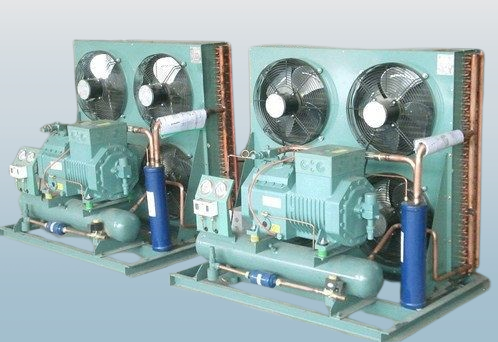
- Condensing unit. The compressor, condenser and fan sit outside the room and reject heat. Browse compressors and condensers.
- Evaporator. The cooling coil and fans inside the room. Freezer evaporators need a defrost system. See our evaporators.
- Expansion valve, filter drier and sight glass. These control the refrigerant flow and keep the system clean and dry.
- Controller. An electronic thermostat with defrost control, alarms and a temperature display. See sensors and controls.
- Door. A well-sealed door with a heater strip on freezer rooms to stop the gasket freezing.
How big should the refrigeration unit be?
The cooling capacity depends on more than the room size. A refrigeration engineer will add up the heat coming through the walls, the warm product loaded each day, how often the door opens, lights, people working inside and fan motors. Loading a lot of warm product at once is the most common reason a cold room struggles, so tell your installer how much product you will load per day and at what temperature.
Tips that cut running costs
- Place the condensing unit in shade with good airflow; hot air around the condenser makes the compressor work harder.
- Fit a strip curtain or air curtain on busy doors.
- Seal every panel joint and pipe entry properly.
- Clean condenser coils regularly, especially in dusty areas.
- Do not block the evaporator fans with stacked product.
- Pre-cool product before loading where possible.
Choosing a refrigerant
Many older cold rooms in Kenya use R22 or R404A. New systems are moving toward lower-GWP alternatives as HFCs are phased down. Discuss the refrigerant choice with your installer, because it affects the compressor, oil, valves and long-term servicing. Read our guide to refrigerant gases for more background.
Frequently asked questions
What temperature should a cold room be?
What panels are used for cold rooms?
Why does my cold room evaporator ice up?
Can a cold room run on solar power?
Do you supply cold room parts in Nairobi?
Planning a cold room or replacing parts? Send the room size, product and target temperature on WhatsApp 0726 086 895 and we will help you source compressors, evaporators, controls and panels.