Choose HDPE pipes and fittings for water mains, boreholes and irrigation, with straight pipes and coils from 1/2 inch to 6 inch plus tees, adaptors, end caps and saddle clamps.
Shop by size
Showing 1–24 of 31 results
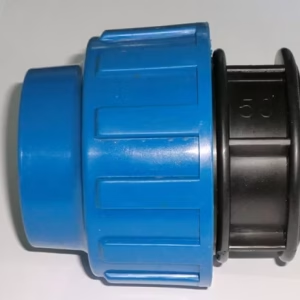
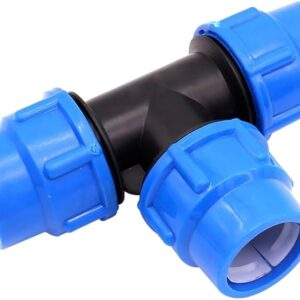
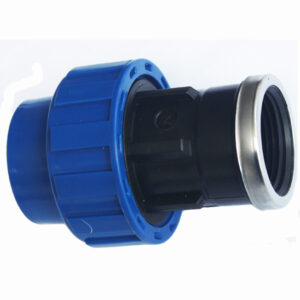
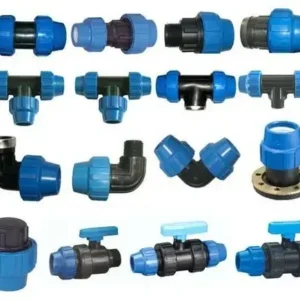
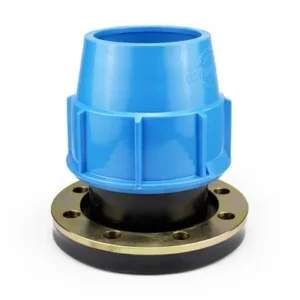
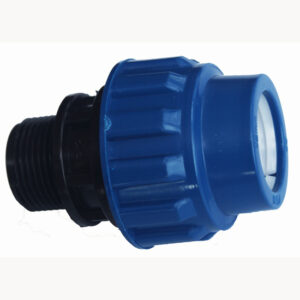
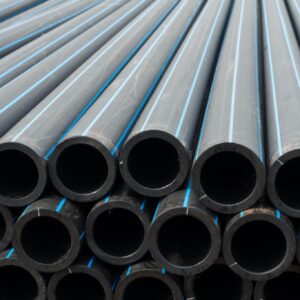
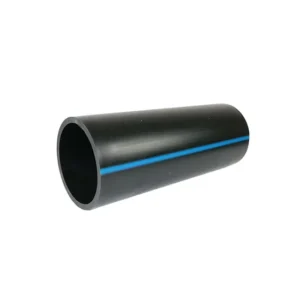
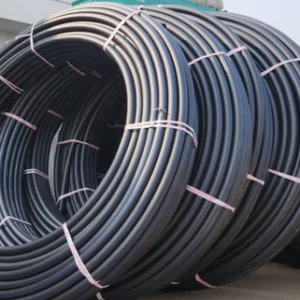
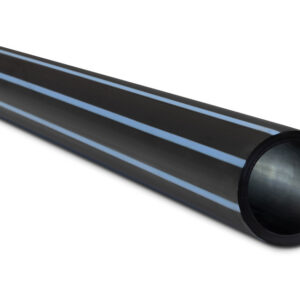
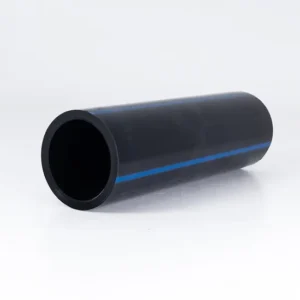
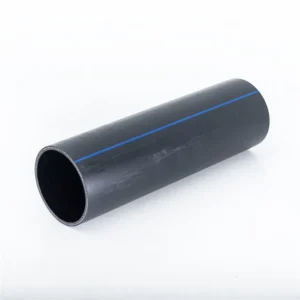
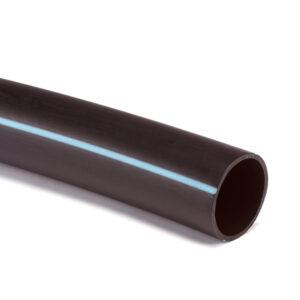
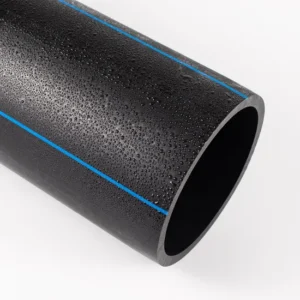
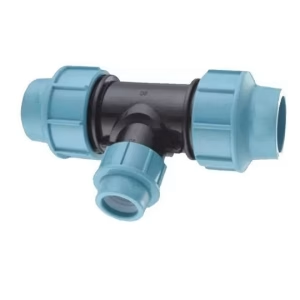
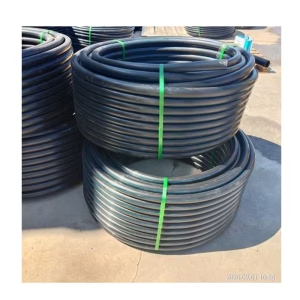
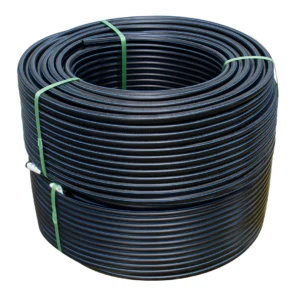
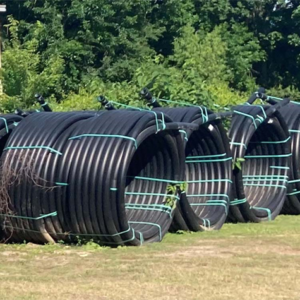
What are HDPE pipes and fittings?
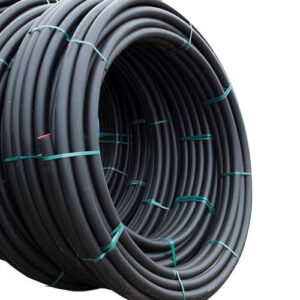
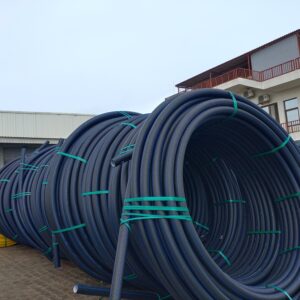
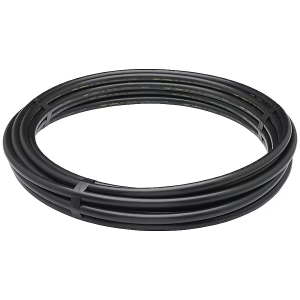
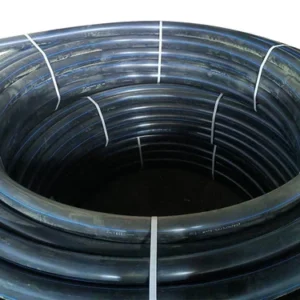
HDPE means high-density polyethylene. It is tough, flexible and does not rust, so it handles ground movement and rough site conditions well. In addition, it comes in long coils, which means fewer joints on long runs.
HDPE pipe joins in three main ways. Compression fittings screw onto the pipe and suit smaller sizes. Electrofusion and butt fusion melt the plastic together and suit larger mains. Because of this, HDPE is common for borehole risers, water mains and farm irrigation.
How to choose HDPE pipe and fittings
- Check whether the size is quoted in inches or by outside diameter in millimetres.
- Choose a pressure rating that suits your pump or mains pressure.
- Use coils for long buried runs and straight lengths for short or exposed runs.
- Use compression fittings for small sizes and fusion joints for large mains.
- Cut the pipe square and chamfer the edge before pushing it into a compression fitting.
- Bed buried pipe in sand and keep sharp stones away from it.
Applications of HDPE pipes and fittings
- Borehole risers. Lowering submersible pumps on corrosion-free HDPE pipe.
- Water mains. Carrying county and estate water over long distances.
- Farm irrigation. Running mains and laterals to drip and sprinkler systems.
- Livestock water. Supplying troughs across ranches and farms.
- Rural water projects. Linking springs, tanks and water kiosks.
- Building connections. Bringing mains water from the meter to the building.
- Uneven ground. Following slopes and bends without many joints.
- Mining and quarries. Moving water and slurry where durable pipe is needed.
- Fish ponds. Filling and draining ponds with flexible pipe.
- Temporary site water. Laying quick, reusable supply lines on construction sites.
Why choose Sparks Plumbing Experts
- Every common pipe materialGI, PPR, PVC, HDPE, brass and stainless fittings are all stocked, so you can match any existing system.
- Common sizes in stockMost fitting types come in several sizes, from small domestic sizes up to larger mains sizes.
- Pipes, fittings and valves togetherPipes, fittings, valves, clamps and jointing products come in one order.
- Help with thread and size standardsWe help you confirm inch and millimetre sizes before you buy, which avoids return trips.
- Visit or collect in NairobiOur store is at KCB Building, Enterprise Road, in the Industrial Area, so you can see parts before you buy or collect your order.
- Quotes your wayAsk for prices by phone, WhatsApp, email or the online quote form, whichever suits you on site.
- Over 1,600 products in one placeOur catalogue covers 55 categories, so one supplier can handle most of your parts list.
- Help choosing the right partSend a nameplate photo, a drawing or the old part, and we help you match size and specification.
- Single items or project quantitiesWe price a single replacement part just as readily as a full site order.
- Supply across East AfricaWe serve customers across Kenya, and we also supply buyers in Uganda and Tanzania.
Frequently asked questions
What does HDPE stand for?
HDPE means high-density polyethylene, a tough and flexible plastic used for water pipes.
What sizes of HDPE pipe do you stock?
Our HDPE pipes run from 1/2 inch to 4 inch and our coils from 1/2 inch to 6 inch. Use the size buttons to see each size.
What is the difference between an HDPE pipe and an HDPE roll?
A roll, or coil, is a long flexible length wound into a circle. It suits long runs with fewer joints.
How are HDPE pipes joined?
Small sizes usually use compression fittings. Larger mains use electrofusion or butt fusion.
Is HDPE good for boreholes?
Yes. HDPE is widely used for borehole risers and supply lines because it does not corrode.
Can HDPE be used above ground?
Yes, but long sun exposure can affect it. Black HDPE with UV protection lasts better outdoors.
Do you deliver HDPE pipes outside Nairobi?
We supply customers across Kenya, and we also serve buyers in Uganda and Tanzania. Delivery options come with the quote.
How much do HDPE pipes cost?
Prices depend on size, pressure rating and length. Request a quote with your list for current prices.
People also search for
HDPE vs PVC pipes
HDPE is flexible and tough, which suits buried and moving ground. PVC is rigid and cheaper for short straight runs. Browse PVC, uPVC & CPVC Pipes & Fittings.
HDPE pipe sizes in Kenya
HDPE is commonly sold from 20 mm (about 1/2 inch) up to large mains sizes.
HDPE compression fittings
Compression fittings grip the pipe with a ring and nut, so you can join small HDPE without heat. View HDPE Fitting.
HDPE butt fusion welding
Butt fusion heats two pipe ends and presses them together, giving a joint as strong as the pipe.
HDPE pipe for borehole
HDPE is a popular borehole riser because it does not corrode and is light to lower. Browse Industrial Pumps.
PE80 vs PE100
PE100 is a stronger grade than PE80, so it can use thinner walls for the same pressure.
HDPE saddle clamp use
A saddle clamp lets you tap a branch off an existing HDPE main. View HDPE Saddle Clamp.
HDPE pipe for irrigation
HDPE mains and laterals feed drip and sprinkler systems on farms. Browse Hoses, Flexible Pipes & Irrigation.
HDPE coil length
Coil lengths vary by size and supplier. Ask us for the length of the coil you need. Request a quote.
HDPE pipe price in Kenya
Prices depend on size and pressure rating. Send your list for a current quote. Request a quote.
Further reading
- High-density polyethylene (HDPE) (Wikipedia)
- Electrofusion (Wikipedia)
- Water Resources Authority (borehole permits) (Water Resources Authority, Kenya)