
Choosing the right pipe is the first decision in any plumbing job, and it is the one that is hardest to undo. Once a pipe is buried in a wall, cast into a slab or laid in a trench, changing it means breaking things. This guide explains how to choose between PPR, GI, HDPE and PVC pipes in Kenya, where each one works best, and the mistakes we see most often on sites around Nairobi.
There is no single best pipe. Each material was developed for a specific job. The right choice depends on what the pipe carries, how hot it gets, the pressure in the line, whether it is exposed to sunlight, and whether it is buried or above ground.
The four pipe materials at a glance
| Material | Best suited to | Jointing method | Watch out for |
|---|---|---|---|
| PPR (polypropylene random copolymer) | Hot and cold water inside buildings | Heat fusion (socket welding) | Long exposed runs in direct sunlight |
| GI (galvanised iron / steel) | Exposed lines, fire lines, risers, mechanical rooms | Threaded fittings | Internal corrosion over time in aggressive water |
| HDPE (high density polyethylene) | Buried water mains, boreholes, irrigation, long runs | Compression fittings, butt or electrofusion | Needs proper bedding and support when buried |
| PVC / uPVC | Drainage, waste, vent and cold water supply | Solvent cement or rubber ring | Not for hot water; brittle when exposed to UV for long |
PPR pipes: the standard for hot and cold water in buildings
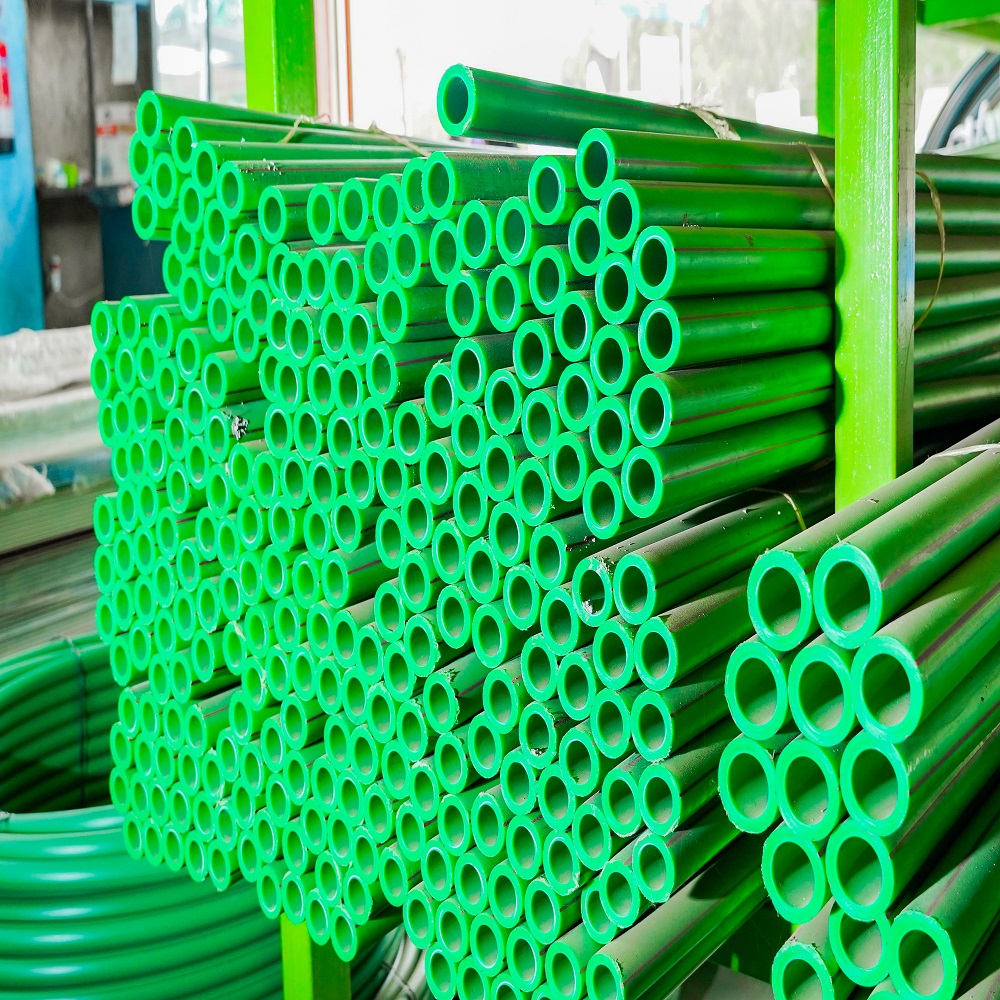
PPR has become the default choice for water supply inside homes, apartments, hotels and offices. The pipe and fittings are joined by heat fusion, so the joint becomes one piece of plastic. A properly fused joint does not rely on threads, tape or glue, which removes the most common source of leaks inside walls.
PPR is sold in pressure classes such as PN16, PN20 and PN25. As a rule, lower classes are used for cold water lines and higher classes for hot water, because the pipe loses strength as temperature rises. If a building has solar water heating or a boiler, use the higher class on the hot side. You will find pipes, elbows, tees, sockets and valves in our PPR pipes and fittings range.
- Use a proper fusion machine with the correct heater die for each size.
- Follow the heating time for the pipe size; under-heating gives weak joints and over-heating narrows the bore.
- Do not run PPR in long exposed lengths on rooftops without UV protection or cladding.
- Allow for thermal expansion on long hot water runs.
GI pipes: strength where pipes are exposed or at risk
Galvanised iron pipes are steel pipes coated with zinc. Their main advantage is mechanical strength. Where a pipe can be knocked, stepped on, exposed to sun or fire, or must carry weight between supports, GI is still a reliable option. Fire hydrant and hose reel lines, plant room headers, exposed risers and tank connections are common examples.
The weakness of GI is internal corrosion. Over years, especially with soft or aggressive water, rust can build up inside the pipe and reduce flow. For this reason many designers now prefer PPR for domestic water inside buildings and keep GI for exposed or mechanical work. See our GI pipes and fittings for elbows, tees, sockets, unions and nipples.
HDPE pipes: long runs, boreholes and buried mains
HDPE pipe is flexible, tough and supplied in long coils for smaller sizes. That makes it the natural choice for borehole risers, farm irrigation, estate water mains and connections from the meter to the building. Fewer joints in the ground means fewer places for a leak to start.
Smaller HDPE lines are usually joined with compression fittings, which can be installed with hand tools. Larger mains are joined by butt fusion or electrofusion. Our HDPE fittings category covers couplings, elbows, tees, end caps and adaptors.
PVC pipes: drainage and cold water
PVC, and the unplasticised version known as uPVC, is light, low-cost and easy to cut and glue. It is the standard material for soil, waste and vent pipes, rainwater downpipes and many cold water supply lines. It must not be used for hot water. Long-term sunlight also makes PVC brittle, so exposed lines should be painted or shielded. Browse our PVC pipes and fittings.
Five questions to ask before you buy
- Hot or cold? Hot water rules out PVC and points to a higher PPR pressure class.
- Buried, concealed or exposed? Buried long runs favour HDPE; exposed or high-risk lines favour GI.
- What pressure? Check the pump or mains pressure and choose a pipe class above it with a safety margin.
- What size? Undersized pipes cause low pressure at upper floors and noisy flow.
- Can fittings be sourced locally? Choose a system where elbows, tees, valves and adaptors are easy to find for future repairs.
Common mistakes we see on site
Mixing materials without the right adaptor is a frequent cause of leaks. Threading a plastic fitting directly onto a steel pipe, or over-tightening threaded plastic joints, can crack the fitting. Use proper transition fittings, such as brass male and female adaptors. Our brass fittings are often used for exactly this purpose.
Another common problem is leaving out isolation valves. Each bathroom, kitchen and major branch should have its own valve so that one repair does not shut off the whole building. Pick from our valves range when you plan the layout.
Frequently asked questions
Which pipe is best for hot water in Kenya?
Can I connect PPR pipe to GI pipe?
Is HDPE pipe suitable for boreholes?
Why does PVC pipe crack on rooftops?
Do you supply pipes and fittings in Nairobi?
Need help choosing pipes for a project? Send us your drawings or a list of sizes on WhatsApp 0726 086 895, or email sparksplumbingexperts@gmail.com, and we will help you put together the right pipes, fittings and valves.