
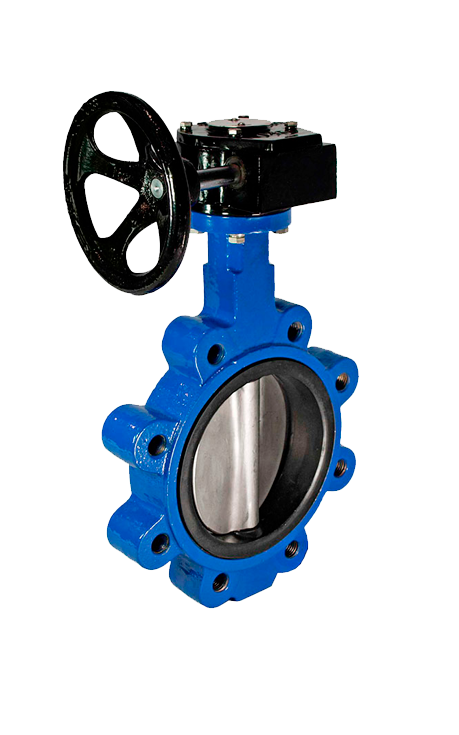
Butterfly valves open, close and throttle flow in large pipelines while taking up very little space. Sparks Plumbing Experts supplies them in Kenya, Uganda and Tanzania for water utilities, building services contractors, factories and processing plants.
Materials, seals and pressure ratings vary widely. Therefore, we confirm the size, medium, temperature and connection type with you before we quote.
What are butterfly valves?
A butterfly valve controls flow with a round disc mounted on a shaft across the pipe. Turning the shaft a quarter turn swings the disc from fully closed to fully open. When open, the disc sits edge-on to the flow, so it causes only a small pressure drop.
Most general-purpose butterfly valves use a rubber or polymer seat that the disc presses against to seal. Because the body is short and light, a butterfly valve costs less and weighs less than a gate valve of the same size, especially above 100 mm.
Further reading
- Butterfly valve design (Wikipedia)
- Types of valves (Wikipedia)
- Pipe flanges and standards (Wikipedia)
Key terms explained
- Wafer type
- A thin body clamped between two pipe flanges by long bolts.
- Lug type
- A body with threaded lugs, so one side of the pipe can be removed while the valve holds.
- PN rating
- Nominal pressure in bar, for example PN16 means 16 bar at reference temperature.
- Quarter turn
- Moving from closed to open with a 90 degree rotation.
- Seat
- The sealing ring the disc closes against, often EPDM or PTFE.
Features and benefits
- Quarter-turn operation for quick opening and closing
- Short, light body that saves space and pipe support
- Low pressure drop when fully open
- Wafer, lug and flanged designs to suit your pipework
- Lever, gear or actuator operation depending on size
- Seat and disc materials chosen for water, chemicals or heat
Technical specifications
| Product | Butterfly valve |
|---|---|
| Body material | Cast iron, ductile iron, stainless steel or alloy (model dependent) |
| Design | Wafer, lug or double flanged |
| Operation | Lever, gearbox or electric/pneumatic actuator |
| Nominal size | From 1 inch up to large diameters (ask for your size) |
| Pressure rating | Commonly PN10 to PN25 or ANSI 150 to 300, by model |
| Temperature | Depends on seat material, often about -10 to 200 °C |
| Supplier | Sparks Plumbing Experts Ltd, Nairobi |
Every butterfly valve has its own pressure, temperature and media limits. Share your line conditions and we will confirm a valve whose data sheet covers them.
Applications of butterfly valves
- Water treatment plants. Isolating filters, pumps and clear water tanks.
- Water distribution. Controlling flow in municipal and estate supply mains.
- Pump stations. Isolating pumps for maintenance on suction and delivery lines.
- HVAC chilled water. Balancing and isolating chiller and cooling tower circuits.
- Fire water lines. Isolating sections of fire mains where approved valves are specified.
- Irrigation. Switching flow between large irrigation blocks and canals.
- Wastewater. Isolating lines in sewage and effluent treatment works.
- Chemical dosing. Handling suitable chemicals with resistant disc and seat materials.
- Food and beverage. Controlling water and product lines with hygienic valve types.
- Power plants. Isolating cooling water circuits and auxiliary lines.
- Cement and mining. Controlling process water and slurry-ready valve types.
- Air and gas ducts. Throttling air or low-pressure gas where rated valves are used.
- Building services. Isolating risers and plant room equipment in large buildings.
- Industrial cooling. Controlling flow to heat exchangers and process coolers.
- Flow throttling. Partly opening the disc to reduce flow where throttling is acceptable.
How to choose and install
- State the pipe size, flange standard and pressure rating of the line.
- Name the fluid and its temperature so we can pick seat and disc materials.
- Choose wafer, lug or flanged design to suit how you will maintain the line.
- Use a gearbox on larger sizes, since a lever becomes hard to turn.
- Allow room for the disc to swing open without hitting pipe walls or fittings.
- Fit new gaskets and tighten flange bolts evenly during installation.
Why choose Sparks Plumbing Experts
- Valves, flanges and gaskets togetherComplete a pipeline joint with matching valves, flanges, gaskets and bolts.
- Pressure-rated optionsMany items come in PN16, class 150 or class 300 ratings, so you can match the line.
- Stainless and carbon steelChoose stainless for corrosion resistance or carbon steel where it suits the service.
- Plant maintenance sparesKeep critical spares on hand for planned shutdowns and breakdowns.
- Visit or collect in NairobiOur store is at KCB Building, Enterprise Road, in the Industrial Area, so you can see parts before you buy or collect your order.
- Quotes your wayAsk for prices by phone, WhatsApp, email or the online quote form, whichever suits you on site.
- Over 1,600 products in one placeOur catalogue covers 55 categories, so one supplier can handle most of your parts list.
- Help choosing the right partSend a nameplate photo, a drawing or the old part, and we help you match size and specification.
- Single items or project quantitiesWe price a single replacement part just as readily as a full site order.
- Supply across East AfricaWe serve customers across Kenya, and we also supply buyers in Uganda and Tanzania.
Related products and accessories
Browse more: Valves · Flanges · Gaskets · Industrial Piping Systems · Industrial Pumps.
Ordering from Sparks Plumbing Experts
We supply customers across Kenya, and we also serve buyers in Uganda and Tanzania. You can collect from our store at KCB Building, Enterprise Road, Nairobi, or ask us about delivery to your site. Send your quantities and specifications, and we will reply with prices and availability.
Request a Quote WhatsApp 0726 086 895
Frequently asked questions
What is a butterfly valve used for?
It opens, closes and throttles flow in pipelines carrying water, air, chemicals and other fluids.
What is the difference between wafer and lug butterfly valves?
A wafer valve sits between two flanges held by long bolts. A lug valve has threaded lugs, so you can remove the pipe on one side while the valve stays in place.
Can a butterfly valve control flow?
Yes, within limits. It throttles well in the middle of its travel, although very small openings can cause noise and seat wear.
Which seat material should I choose?
EPDM suits most water and HVAC lines, while PTFE or other seats suit many chemicals and higher temperatures. Tell us the fluid and temperature, and we will advise.
What does PN16 mean?
PN16 means the valve is rated for 16 bar nominal pressure at the reference temperature. Always check the full rating for your temperature.
Are butterfly valves cheaper than gate valves?
In larger sizes they are usually cheaper, lighter and shorter than gate valves of the same diameter.
Do I need a gearbox?
Larger valves and higher pressures need more force to turn, so a gearbox or actuator makes operation easier and safer.
Can butterfly valves be automated?
Yes. Many models accept electric or pneumatic actuators for remote or automatic control.
What sizes do you supply?
We supply common sizes for building services and industry. Tell us your size, and we will confirm availability.
Which gaskets do I need?
Many wafer valves seal on their rubber seat, while other types need flange gaskets. Check the manufacturer's instructions for your model.
Do you deliver across East Africa?
We supply customers across Kenya, and we also serve buyers in Uganda and Tanzania. Delivery details come with your quote.
How do I order butterfly valves?
Send the size, rating, medium and quantity through our quote form or on WhatsApp. We reply with prices and availability.
People also search for
Butterfly valve price in Kenya
Prices depend on size, body and seat material, pressure rating and operator type. Send your requirements for a quote.
Butterfly valve vs gate valve
A gate valve lifts a wedge out of the flow and is used mainly for full open or closed service. A butterfly valve is shorter, lighter and quicker to operate, especially in large sizes.
Butterfly valve vs ball valve
A ball valve uses a drilled ball and gives tight shut-off, mostly in smaller sizes. Butterfly valves save weight and space in larger pipes.
Butterfly valve parts
The main parts are the body, disc, shaft (stem), seat and the operator, such as a lever, gearbox or actuator.
Concentric vs double offset butterfly valve
In a concentric valve the shaft passes through the centre of the disc, which suits general water service. A double offset valve moves the shaft off-centre, reducing seat wear and handling higher pressures.
Double flanged butterfly valve
It has a flange on each side that bolts to the pipe flanges with short bolts, which suits larger sizes and heavy-duty lines.
Pneumatic butterfly valve
A pneumatic actuator uses compressed air to open and close the valve. Spring-return versions move to a safe position if air is lost.
Butterfly valve installation direction
Many concentric valves work in both directions. Some offset designs have a preferred direction marked with an arrow, so check the body.
EPDM vs NBR seat
EPDM suits water, glycol and many mild chemicals but not oils. NBR (nitrile) suits oils and fuels.
Butterfly valve sizes
They are made from small sizes up to very large diameters, and are most cost-effective from about 50 mm upwards.




Reviews
There are no reviews yet.